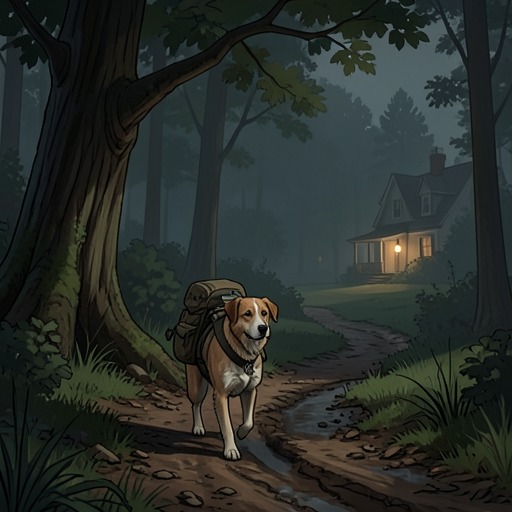
Bella escapes Warren and Dude’s car
A Dog's Way HomeBella escapes Warren and Dude’s car at a turning point in her journey: she stops mistaking a kind human encounter for a path back to Lucas and acts on her own determination to go home. The escape begins with a lowered window and a promise that she cannot trust to fulfill her purpose, and it opens onto a journey in which she must balance that purpose with care for another vulnerable animal.
The decision to leave
Warren lowers the car window because he recognizes the danger of leaving Bella shut inside, even on a cool day. He rubs her head and reassures her that he and Dude will return and help her find home. Bella recognizes the tone as one people use when leaving a dog; it recalls Lucas going to work and revives the pain of separation. His promise is gentle, but it does not answer the need driving her: to reach Lucas.
As Warren and Dude leave the car and enter a large building, Bella notices glass doors like those at the place where barking dogs were kept. The resemblance gives her a reason to distrust the direction events are taking. She understands that people can be kind, feed her, and take her for a ride without bringing her to Lucas; some may instead take her farther from him. That recognition turns a passive wait into a decision.
Bella wriggles through the open window, first getting her head and front paws outside, then pushing her rear end forward until she falls onto the pavement. She is off leash. Rather than wait for Warren and Dude to return, she shakes herself off, lifts her nose, and trots toward the smell of food. In the unfamiliar town, she avoids friendly calls from people in cars and doorways because friendliness alone no longer convinces her that they can help her reach Lucas. The escape is therefore more than a reflexive dash from a vehicle: it is a choice guided by her distinction between being cared for and being taken home.
A journey shared with Big Kitten
The escape leads into a stretch of travel with Big Kitten, whose company changes the practical demands of Bella’s return. They spend several days near a kill, eating and playing together. Big Kitten pounces; Bella knocks her onto her back, and the cub twists away. At dusk Big Kitten sometimes disappears into the trees and returns with a small rodent to share. When Bella resumes moving toward Lucas, Big Kitten follows, keeping to cover and sometimes falling out of sight. Bella waits when she can no longer locate her precisely, and Big Kitten eventually catches up.
Their partnership is not simply a convenience. Bella knows she could cover more ground alone, but feels responsible for Big Kitten’s safety. When human scents or dogs make the trail threatening, they hide or keep their distance. Bella longs to greet other dogs, but recognizes that Big Kitten would not welcome them and that these dogs are accompanied by people, as Bella hopes one day to be with Lucas. The choice to continue together slows the homeward journey while making it a shared one.
That care is tested when Bella detects four coyotes tracking them. She recognizes their feral scent and understands that they are hunting, while Big Kitten has not yet noticed the danger. The contrast shows Bella’s attentiveness to the cub as well as her own vulnerability: she identifies the threat, but knows that two animals cannot simply outmatch a pack. The danger makes companionship consequential rather than merely affectionate.
Winter changes the balance between them. In deep snow Bella struggles to move, while Big Kitten crosses it with far less difficulty. The cub finds prey at night, including a young elk buried in the snow, and leads Bella to it. They eat, then return to their temporary den; Big Kitten’s recurring hunts of deer, elk, rabbits, and smaller mammals keep them from starving. The animal Bella has chosen to protect becomes the more capable provider in this landscape. Bella’s commitment to getting home persists, but survival now depends on accepting Big Kitten’s lead and help.
Care beyond the route home
Bella’s decision to keep moving coexists with a recurring impulse to stay beside those who need comfort. At the VA hospital, Ty takes her to rooms where people welcome and pet her. Layla smooths her fur with trembling hands, and Bella later climbs into Mack’s chair when she senses sadness in him. Mack hugs her. These encounters establish that her attention to distress is not limited to Lucas or to the journey: she responds physically to other people’s loneliness and fear.
Lucas later reads that some dogs can sense seizures, and Terri agrees that Bella seemed to know what was happening. That recognition helps explain the value others find in her presence, even as her own goal remains a return to Lucas. Later, when a man is moaning and another person is distressed, Bella stays with them and a male dog while help approaches. She understands this as part of her job, recalling Ty and friends who were sad and needed a dog. The episode sharpens the contrast at the heart of the car escape: Bella can take responsibility for others without surrendering her own longing for home.
Significance
The car escape gives Bella’s separation from Lucas an active shape. Warren and Dude offer reassurance and intend to help, but Bella judges their actions by whether they lead toward Lucas, not by kindness alone. Her physical passage through the window makes visible a decision she has reached internally: waiting safely in the wrong place is still being kept from home.
The journey that follows complicates that resolve without replacing it. Bella continues toward Lucas while delaying herself to protect Big Kitten, and later accepts the cub’s hunting ability when snow makes her own movement difficult. Her escape thus sets in motion both a quest and a relationship of mutual dependence. Going home remains her direction; care for another creature becomes part of how she travels.